Today our class split into three groups. One brewed, one learned about draught systems, and my group filtered. Filtering was really quick, so we only had a half day of class today as a result. The filter we used was a plate and frame filter (basically, the frame holds plates, and sheets of cellulose are placed in between the sheets to form a filter bed). We used diatomaceous earth as a prefilter to help remove some of the yeast before the beer reached the cellulose sheets. This helps prevent the filter from clogging and creating a pressure spike. The beer we filtered was a hefeweizen (the yeast will be added back into the beer for bottle fermentation) and it was sterile filtered.
Sterile filtration means that the beer was filtered through a very fine filter (.45 micron), and all of the yeast, protein, and potential bacteria was taken out. This type of filtration is the most commonly complained about type by beer geeks because of the perceived loss of flavor. My theory is that the flavor doesn't change, but the mouthfeel does as a result of stripping out proteins and smaller yeast cells which contribute to the viscosity and body of beer. It was definitely a good day for a half day since it is 75 degrees and sunny here in Munich!
Monday, April 7, 2014

Saturday, April 5, 2014
Catching Up
I decided to take a few days off from blogging, partially because of the material we've been covering has not been stuff that most people will want to read about, and partially because we have been going out after class a lot more frequently. I'll try to get caught back up now...
On Thursday, we spent the entire day looking at Doemens Academy's packaging area. We were shown how to turn on the steam to the bottling facility (used for sanitizing), the bottle washer (75% of beer bottles in Germany are recycled and consumers pay deposits on them...), the crate washer (... And they come in crates, which also are washed and reused and consumers pay a deposit for), the bottle filler and conveyor belts, a PET filler, and a PET washer. The most interesting part of the day for me, was seeing what PET bottles look like when they get to the packaging facility. 1 liter bottles actually look like 3 inch vials, before they are heated, and inflated to the full one liter. This saves a lot of space in the packaging facility. We will be taking turns running the bottler next week as we bottle the beers we brewed last week.
Yesterday, we had a half day (Fridays are always half days at Doemens). The entire day was sensory analysis, meaning when we got to class in the morning, we started sampling beers almost right away. Sounds fun right? Wrong! We were drinking beers in our first session that had been spiked with off flavors. We drank less common off flavors, but ones that do still show up on occasion. The flavors ranged from metallic to stinky feet to lemon pledge and to garlic. After the gross part was over though, we did get to do a fun activity. It was a kind of beer geeks board game. We had a board that had attributes written on it. "Top Fermented/Bottom Fermented", "Alcohol range", "Country Of Origin", "Type of Style", and "Name the Brand". We were given beers in a blind tasting and told to place a chip on anyone of the spots. If we got it right, we got to keep our chip and got more based on the ring in which we placed the chip. I did ok, with my guessing, but I played a little too safe in the early rounds and realized too late that I needed to take more risks in order to win the game. It would be something fun to play again with some beer geeks back home.
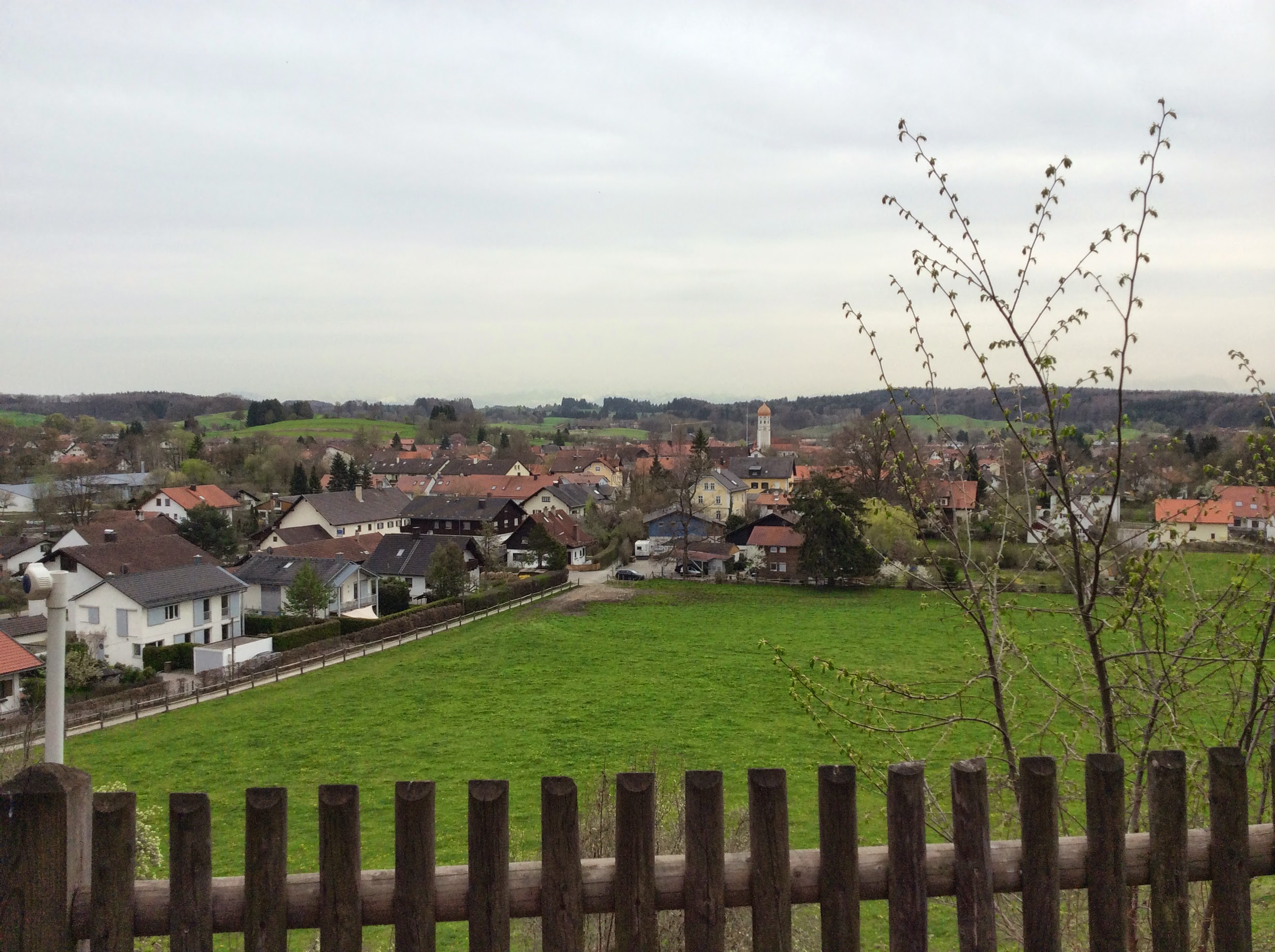
After class, a lot of us went to Andechs and visited the monestary and Biergarten. It was really pretty, up on top of a hill overlooking a small town and a lot of hilly farmland. The beer was ok, the food was great, and the scenery was awesome.
Today was by far the most exciting day I have had in Bavaria. I woke up early this morning and headed to the Bavarian Alps for some snowboarding. The mountain was Zugspitze, which is the tallest mountain in Germany. The slopes were incredibly challenging, very fast, and unforgiving. It was nice after I was done to find a bar in an igloo to sit and enjoy a few Lowenbrau lagers.
Next week, we are doing a lot more hands on activities, and it doubt I will go out too often since we are getting into crunch week before we take our final exams on Friday, so I should have plenty to write about.



On Thursday, we spent the entire day looking at Doemens Academy's packaging area. We were shown how to turn on the steam to the bottling facility (used for sanitizing), the bottle washer (75% of beer bottles in Germany are recycled and consumers pay deposits on them...), the crate washer (... And they come in crates, which also are washed and reused and consumers pay a deposit for), the bottle filler and conveyor belts, a PET filler, and a PET washer. The most interesting part of the day for me, was seeing what PET bottles look like when they get to the packaging facility. 1 liter bottles actually look like 3 inch vials, before they are heated, and inflated to the full one liter. This saves a lot of space in the packaging facility. We will be taking turns running the bottler next week as we bottle the beers we brewed last week.
Yesterday, we had a half day (Fridays are always half days at Doemens). The entire day was sensory analysis, meaning when we got to class in the morning, we started sampling beers almost right away. Sounds fun right? Wrong! We were drinking beers in our first session that had been spiked with off flavors. We drank less common off flavors, but ones that do still show up on occasion. The flavors ranged from metallic to stinky feet to lemon pledge and to garlic. After the gross part was over though, we did get to do a fun activity. It was a kind of beer geeks board game. We had a board that had attributes written on it. "Top Fermented/Bottom Fermented", "Alcohol range", "Country Of Origin", "Type of Style", and "Name the Brand". We were given beers in a blind tasting and told to place a chip on anyone of the spots. If we got it right, we got to keep our chip and got more based on the ring in which we placed the chip. I did ok, with my guessing, but I played a little too safe in the early rounds and realized too late that I needed to take more risks in order to win the game. It would be something fun to play again with some beer geeks back home.
After class, a lot of us went to Andechs and visited the monestary and Biergarten. It was really pretty, up on top of a hill overlooking a small town and a lot of hilly farmland. The beer was ok, the food was great, and the scenery was awesome.
Today was by far the most exciting day I have had in Bavaria. I woke up early this morning and headed to the Bavarian Alps for some snowboarding. The mountain was Zugspitze, which is the tallest mountain in Germany. The slopes were incredibly challenging, very fast, and unforgiving. It was nice after I was done to find a bar in an igloo to sit and enjoy a few Lowenbrau lagers.
Next week, we are doing a lot more hands on activities, and it doubt I will go out too often since we are getting into crunch week before we take our final exams on Friday, so I should have plenty to write about.
Wednesday, April 2, 2014
Wort Analysis, Yeast, and Sensory
Yesterday was a great day with more chemical analysis, dry yeast handling, and sensory training. Our chemical analysis was about wort and which parameters we should be checking and trying to control. These include concentration of dissolved sugar, pH, starches (checked with an iodine test), color, and attenuation limit (using a forced fermentation).
After our chemical analysis lecture, we talked about dry yeast handling. Each time we talk about dry yeast here, I am more convinced that it should be kept out of production breweries and left for small brewpubs and homebrewers, one of the big issues I have with it is that when the yeast is shipped, between 30-40% of the yeast cells are already dead and commonly misshapen. To me, the disadvantages outweigh the advantages by a lot, not that great beer can't be brewed with dry yeast.
Afterwards, we moved on to a mock tasting panel in which we did a few different types of tastings. The most interesting one, we tried three different pilsners, gave certain attributes numerical values, and made charts of how our tasting panel felt about the beers. This could be a great way of doing recipe development in the future with a tasting panel at home.
After our chemical analysis lecture, we talked about dry yeast handling. Each time we talk about dry yeast here, I am more convinced that it should be kept out of production breweries and left for small brewpubs and homebrewers, one of the big issues I have with it is that when the yeast is shipped, between 30-40% of the yeast cells are already dead and commonly misshapen. To me, the disadvantages outweigh the advantages by a lot, not that great beer can't be brewed with dry yeast.
Afterwards, we moved on to a mock tasting panel in which we did a few different types of tastings. The most interesting one, we tried three different pilsners, gave certain attributes numerical values, and made charts of how our tasting panel felt about the beers. This could be a great way of doing recipe development in the future with a tasting panel at home.
Monday, March 31, 2014
Calculations, Mash Techniques, and Malt Analysis
Today was one of our most informative days so far. We started off the class with a discussion about malt analyses and how to understand them better. As we were going over the lecture, I was looking at an analysis from our malt provider back home, and I think I may have found the source of some of our frustrations with beer haze.
After looking at the analysis, we had a lecture about calculations for recipes, and we tied some of the discussion into our malt analysis lecture. When we were talking about mash temperatures in our calculations, I had the opportunity to ask questions about enzymes and how they work at various temperatures. It was good to talk to our professor about amylase enzymes and the effects of breaking the mash into two seperate saccrification rests in order to get each type of amylase enzyme active on its own, which in turn helps to have more control over the fermentability of the wort.
Next, we had a talk on quality management, but most of that lecture we were talking about beer history and what quality management meant in the past. We are not done with that lecture and I think we will continue later in the week,
Lastly, we talked about fermentation control and we practiced taking gravity readings. While this sounds very basic to any homebrewer, we talked about things that can effect gravity readings and we were shown some examples of gravity readings that were off for various reasons (yeast in suspension, temperature, test tube not filled enough, hydrometer got the top wet, etc.) and it was shocking to see how far off it is possible to be on a reading. Today was definitely a day filled with a lot more practical information than we normally have.
After looking at the analysis, we had a lecture about calculations for recipes, and we tied some of the discussion into our malt analysis lecture. When we were talking about mash temperatures in our calculations, I had the opportunity to ask questions about enzymes and how they work at various temperatures. It was good to talk to our professor about amylase enzymes and the effects of breaking the mash into two seperate saccrification rests in order to get each type of amylase enzyme active on its own, which in turn helps to have more control over the fermentability of the wort.
Next, we had a talk on quality management, but most of that lecture we were talking about beer history and what quality management meant in the past. We are not done with that lecture and I think we will continue later in the week,
Lastly, we talked about fermentation control and we practiced taking gravity readings. While this sounds very basic to any homebrewer, we talked about things that can effect gravity readings and we were shown some examples of gravity readings that were off for various reasons (yeast in suspension, temperature, test tube not filled enough, hydrometer got the top wet, etc.) and it was shocking to see how far off it is possible to be on a reading. Today was definitely a day filled with a lot more practical information than we normally have.
Friday, March 28, 2014
End of Week One
It was a huge shock to wake up today and realize that our first week in Munich is already coming to an end. We have had so many great experiences in the week, it just flew by. It has been awesome to go to brewpubs after class and to speak to locals about beer. In all honesty, in the classroom we haven't learned as much as we did each day in Chicago, but we have learned a lot by talking to our German professors and colleagues.
Yesterday, we got to brew for the first time in Munich. It was my first time using a four vessel system (600 hectoliter brewhouse). The mash tun was heated with steam, so we got to do a step mash. I was talking to the Doemens brewer that was guiding us, and when I told him that in America craft breweries typically do single infusion mashing, he was shocked. He said that if you told a German brewer that they could brew great beer using a single infusion, they would call you crazy and tell you that it is not possible. While we were brewing, we also worked on cleaning the fermentation room, malt grist assortment analysis, forced fermentation tests, and we took turns as a group being in charge of the brewing.
After class yesterday, we went to this incredible beer patio (not a true Biergarten). I spent most of the night drinking Augustiner Pils. It was an eye opening experience for me. I always thought that I didn't like pilsner, but that beer was incredibly drinkable, crisp, and refreshing. I wish it was something that we could get fresh in America.
Today was a bit of an easier day. We started off with carbonation calculations for bottle conditioning, then we did brewhouse efficiency calculations, and we finished off the day with a tasting. This tasting was different from the others. We had to break into groups, try a beer, talk about it for 20 minutes, and then give a 10 minute presentation to the rest of the class about the beer. The idea was to describe the beer in a way that would make the class want to buy it.
Tonight, I'll be going to the English Gardens. If it is anywhere near as much fun as I had at Schneider Weisse, Augustiner, and White Fang, I just might have to run away from America and live in Munich the rest of my life. The people here have been very friendly. It seems that you can't go to a pub without a local teasing us Americans and then buying us drinks. I even met two brothers from Cologne that bought 4 rounds of drinks and invited me to a beer fest. Prost!
Yesterday, we got to brew for the first time in Munich. It was my first time using a four vessel system (600 hectoliter brewhouse). The mash tun was heated with steam, so we got to do a step mash. I was talking to the Doemens brewer that was guiding us, and when I told him that in America craft breweries typically do single infusion mashing, he was shocked. He said that if you told a German brewer that they could brew great beer using a single infusion, they would call you crazy and tell you that it is not possible. While we were brewing, we also worked on cleaning the fermentation room, malt grist assortment analysis, forced fermentation tests, and we took turns as a group being in charge of the brewing.
After class yesterday, we went to this incredible beer patio (not a true Biergarten). I spent most of the night drinking Augustiner Pils. It was an eye opening experience for me. I always thought that I didn't like pilsner, but that beer was incredibly drinkable, crisp, and refreshing. I wish it was something that we could get fresh in America.
Today was a bit of an easier day. We started off with carbonation calculations for bottle conditioning, then we did brewhouse efficiency calculations, and we finished off the day with a tasting. This tasting was different from the others. We had to break into groups, try a beer, talk about it for 20 minutes, and then give a 10 minute presentation to the rest of the class about the beer. The idea was to describe the beer in a way that would make the class want to buy it.
Tonight, I'll be going to the English Gardens. If it is anywhere near as much fun as I had at Schneider Weisse, Augustiner, and White Fang, I just might have to run away from America and live in Munich the rest of my life. The people here have been very friendly. It seems that you can't go to a pub without a local teasing us Americans and then buying us drinks. I even met two brothers from Cologne that bought 4 rounds of drinks and invited me to a beer fest. Prost!
Wednesday, March 26, 2014
Microscopy
Wow... What a great day... today we were in a lab, discussing microscopy. We worked on identifying different yeast strains and bacterias. It was very informative, and it was great to work hands on. It was very helpful to see up close and personal examples of the various types of beer spoilage organisms. We looked at 3 types of saccromyces and multiple types of lactic acid producing bacteria. Tomorrow, we will be working in the brewery. I can't wait!
Tuesday, March 25, 2014
Munich Day 2
Second day at Doemens today. We started off the morning working on hop calculations and talking about theories of recipe development. We discussed how you can set a target bitterness unit, and then say "I want x percentage of my bitterness from my first addition, y amount from my second, and z amount from my third" and then use algebra to calculate how much hops you need from each addition to get your target IBU and flavor.
Next, we discussed yeast propagation. It sounds like Doemens is very set in their method of propagation, and may even have a higher level of quality over Wyeast and White Labs. From what I understood, Doemens is more patient with propagation steps and is very gentle with the yeast. According to our professor, this allows for a little bit of leeway when fermenting a full batch of beer... According to our professor, when yeast is handled very well, it can be advantageous to pitch less yeast than is typically recommended in order to get positive flavor contributions.
We then did back to back styles tasting courses. We tried a traditional English Porter, an English Pale Ale (both of which had brettonamyces), a Berliner Weisse, Duckstein, Frü Kölsch, and Altbier in our first session. Of these, the Berliner Weisse was by far my favorite. The porter and pale ale were my least favorite, but they felt overly bitter and spicy from the Brett. According to my friend Ky, from Cologne, the Kölsch was not a good example of the style, and he invited me to a Cologne bierfest here in Munich next week.
In our second session, we tried the German styles that are common today. Dunkel, dopplebock, Helles, Pils, Export Dunkel, and Schwarzbier. All of these were pretty good, but so much of the German beer tastes the same, I am already starting to miss how many options we have in America. To wrap up the day, we milled grain for a batch of beer to be brewed tomorrow.
Next, we discussed yeast propagation. It sounds like Doemens is very set in their method of propagation, and may even have a higher level of quality over Wyeast and White Labs. From what I understood, Doemens is more patient with propagation steps and is very gentle with the yeast. According to our professor, this allows for a little bit of leeway when fermenting a full batch of beer... According to our professor, when yeast is handled very well, it can be advantageous to pitch less yeast than is typically recommended in order to get positive flavor contributions.
We then did back to back styles tasting courses. We tried a traditional English Porter, an English Pale Ale (both of which had brettonamyces), a Berliner Weisse, Duckstein, Frü Kölsch, and Altbier in our first session. Of these, the Berliner Weisse was by far my favorite. The porter and pale ale were my least favorite, but they felt overly bitter and spicy from the Brett. According to my friend Ky, from Cologne, the Kölsch was not a good example of the style, and he invited me to a Cologne bierfest here in Munich next week.
In our second session, we tried the German styles that are common today. Dunkel, dopplebock, Helles, Pils, Export Dunkel, and Schwarzbier. All of these were pretty good, but so much of the German beer tastes the same, I am already starting to miss how many options we have in America. To wrap up the day, we milled grain for a batch of beer to be brewed tomorrow.
Subscribe to:
Posts (Atom)